IICDEM 2026 Puts India at the Helm of Global Democracy Talks
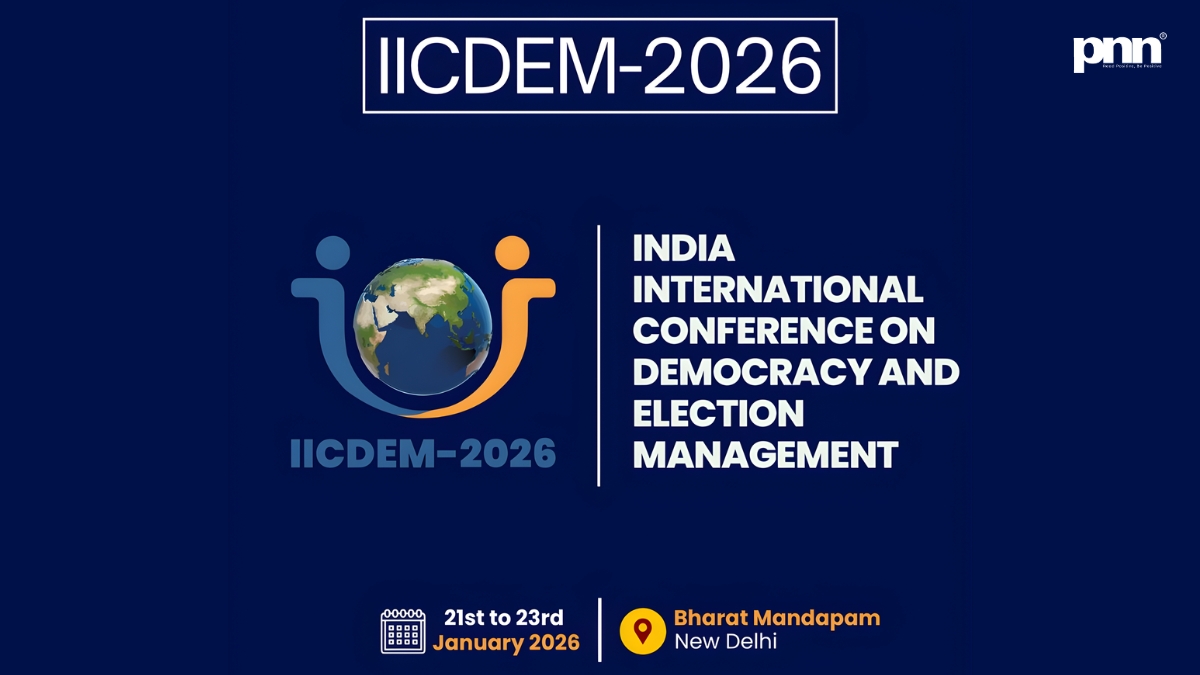
New Delhi [India], January 19: Something unusual is happening in New Delhi this January. The people who run elections worldwide are coming to compare notes. And India is hosting. From January 21 to 23, the Election Commission of India will host the inaugural India International Conference on Democracy and Election Management, IICDEM 2026, at Bharat Mandapam.
Three days that quietly say a lot about where India now stands.
IICDEM 2026 is not being pitched as another glossy international meet. It’s being built as the largest global conference India has hosted on democracy and election management, yes, but the emphasis is on substance.
Nearly 100 international delegates from over 70 countries are expected. These are not observers. They include Election Management Body officials, representatives of international organisations, foreign missions stationed in India, and academics who spend less time theorising and more time fixing broken systems.
India, for once, is not explaining democracy. It’s exchanging it.
View this post on Instagram
The inaugural session on January 21 will be led by Chief Election Commissioner Shri Gyanesh Kumar, alongside Election Commissioners Dr. Sukhbir Singh Sandhu and Dr. Vivek Joshi.
They will formally receive the delegates and open the proceedings. It matters. Not for protocol reasons, but because India’s election leadership now carries lived credibility. Running the world’s largest elections does that to an institution.
This is experience speaking to experience.
The programme across the three days is deliberately packed.
There are general and plenary sessions involving Election Management Bodies, starting with the Inaugural Session and moving into the EMB Leaders’ Plenary. Then come EMB Working Group Meetings. This is where things get technical. Sometimes uncomfortable. Often useful.
Alongside these sit thematic sessions dealing with global electoral pressures, international electoral standards, and innovations that actually survive contact with reality.
No motivational speeches. Mostly hard questions.
One of the more interesting design choices at IICDEM 2026 is its reliance on breakout work.
There are 36 thematic groups planned. Each is led by Chief Electoral Officers from Indian States and Union Territories. Each is backed by national and international academic experts.
The academic spread is wide. Four IITs. Six IIMs. Twelve National Law Universities. IIMC. It’s a reminder that elections are not just administrative events. They sit at the intersection of technology, law, management, and communication. Ignore one, the system wobbles.
Away from the microphones, the Election Commission of India will conduct over 40 bilateral meetings with Election Management Bodies from across the globe.
These meetings focus on cooperation and shared challenges. Misinformation. Trust deficits. Capacity building. Election security. The unglamorous stuff that keeps systems upright.
This is often where the real learning happens. Quiet rooms. Direct questions. No press releases.
IICDEM 2026 will also see the formal launch of ECINET, the Election Commission of India’s integrated digital platform for election-related information and services.
ECINET is positioned as a single digital gateway. One platform. Less fragmentation. More coherence.
For a democracy of India’s size, digital order is not a luxury. It’s survival infrastructure.
Running parallel to the conference is an exhibition that lays out the scale of Indian elections without shouting about it.
It showcases the complexity of conducting elections in India and highlights recent initiatives by the ECI to strengthen the two core pillars of the process: accurate electoral rolls and credible election conduct.
For many international delegates, this will be the first time they see what “scale” actually means in practice.
On the first day, delegates will also watch “India Decides”, a docuseries capturing the making of the Lok Sabha 2024 elections.
It traces the decisions, coordination, and pressure behind the largest election exercise in the world. Less spectacle. More systems thinking.
It fits the mood of the conference.
Why IICDEM 2026 Lands Differently?
There’s a reason IICDEM 2026 feels different.
India isn’t hosting to validate itself. It’s hosting because its election machinery has reached a point where sharing is useful. Necessary, even.
Globally, elections are under strain. From trust erosion to logistical overload. What works matters more than what sounds good.
India brings receipts.